

Daily Life in a Medieval Irish Monastery
The Shape of the Monastic Day
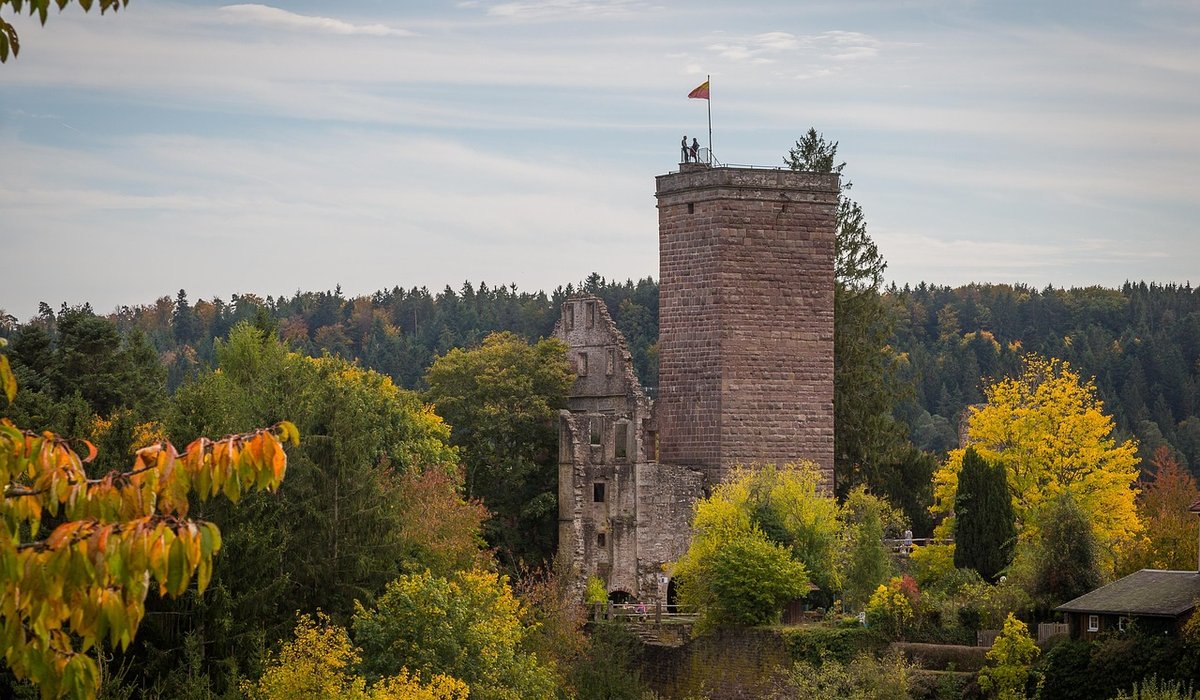
A bell rung from the round tower or the church gable woke the community long before daylight. In a medieval Irish monastery — Clonmacnoise on the Shannon, Glendalough between its two lakes, or a small house of a dozen monks behind an earthen bank — life turned on a steady rhythm of prayer, manual work and study. Within the enclosure stood a graveyard, one or two churches, a small oratory, a round tower, a refectory, a scriptorium and storehouses; beyond it lay the fields, mill, fish ponds and grazing that fed everyone. Inside the boundary lived not only monks but lay brothers, farmhands, craftsmen, and often a school of boys learning their letters. Time was measured by sunlight and by the bell, so the hours stretched long in summer and shrank in the dark of winter.
The Round of Prayer
The core of monastic life was the Office, recited eight times in twenty-four hours. Vigils, or Matins, fell around two in the morning; Lauds followed at first light, then Prime, Terce, Sext and None through the working day, Vespers at dusk, and Compline before bed. A monk might sing all one hundred and fifty psalms in a week, plus canticles, antiphons and readings from Scripture and the Fathers. Most of it was chanted from memory, since books were few and precious.
Fasting shaped the table as much as prayer shaped the church. On ordinary days the community ate one main meal, usually in the early afternoon, of bread, oats, vegetables, fish, butter, cheese and ale. Meat was avoided except for the sick and on feast days. Silence was kept in the refectory while a reader read aloud from a saint's life or a homily. Many monks also had a soul-friend, or anamchara, to whom they confessed privately and honestly — a distinctly Irish practice.
Work of Hands
Prayer did not excuse anyone from labour. Irish monks prized work as a form of devotion, and the practical tasks of the monastery were shared among the community and its lay tenants. A typical day's work might include:
- Grinding oats and barley by hand with a quern, or at the monastery mill
- Tending cattle, sheep, pigs and geese, and cutting hay for winter fodder
- Keeping bees for honey and wax, on which the church candles depended
- Brewing ale, baking bread, churning butter and salting fish
- Carpentry, thatching and repairing wattle and timber buildings
- Forging iron tools, shoeing horses and casting small bronze bells
- Carving high crosses and grave slabs, and cutting stone for church walls
- Fishing the river or coastal waters, and working the monastic ponds
This was not merely housekeeping. The monastery was an estate, and its surplus — grain, wool, hides, butter, metalwork — supported the church, the school, the poor and the guesthouse. Many monasteries became the nucleus of towns, with fairs and markets growing up at their gates.
The Scriptorium and the Keeping of Books
Some monks were set apart for the slowest and most precious work of all: copying books. Vellum came from calfskin, scraped, stretched and pounced with chalk; sheets were ruled with a stylus and pricked at the margins. Ink was made from oak galls, iron sulphate and gum arabic, and pigments from woad, orpiment, verdigris and imported lapis. A scribe might work in a cold room, fingers stiff, a candle at his elbow, taking months to finish a single gospel book.
What they copied mattered enormously. They preserved Scripture, psalters, canon law and the writings of the Church Fathers, and also native material: Irish law tracts, genealogies, hero tales such as the Táin Bó Cúailnge, and medical and botanical knowledge. In the margins they wrote glosses in Old and Middle Irish, explaining the Latin and often adding a personal note — a prayer, a complaint about the cold, or a joke about a cat. Famous manuscripts such as the Book of Durrow, the Book of Kells and the Cathach of St Columba show how far the craft was taken.
When Viking raids and later Norman incursions threatened the monasteries, books were among the first things carried away. Some were hidden in souterrains or handed to neighbouring houses; others travelled to the Continent with exiled scholars and were copied in monasteries in Britain, Francia and Italy. That quiet rescue, repeated generation after generation, is why so much of early Irish learning survives at all.
Hospitality and the Wider World
Every monastery kept a guesthouse, and the duty to welcome the stranger was taken seriously. Travellers, pilgrims, merchants, the sick and the poor could expect shelter, a meal and a place by the fire. A hospitaller received them, and the abbot or a senior monk would wash their feet. Guests were given bread, ale and whatever the kitchen had, while the community's own diet remained plain, and almsgiving was part of the routine rather than an occasional gesture.
Monasteries were schools as well as shelters. Boys were taught Latin, grammar, Scripture and computus — the complicated business of calculating the date of Easter, which determined the whole liturgical year. Students came from Britain and Francia to study in Irish houses, and Irish scholars travelled the other way, teaching in courts and monasteries across Europe. With metalworkers, stone carvers and scribes working alongside them, a great monastery was at once a place of prayer, a farm, a workshop, a library, a school and an inn.
What survives today — the round tower stumps, the high crosses, the fragments of vellum, the field systems under the grass — is the visible remainder of that busy, ordinary, hard-working daily life.


History
-
Start with civil records and parish registers to uncover family roots, using free online indexes and local archives across Ireland.


Travel


-

Long established fact that a reader will be distracted
-

Long established fact that a reader will be distracted
-

Long established fact that a reader will be distracted


Genealogy
Karla Gleichauf
12 May 2017 at 05:28 pm
On the other hand, we denounce with righteous indignation and dislike men who are so beguiled and demoralized by the charms of pleasure of the moment
M Shyamalan
12 May 2017 at 05:28 pm
On the other hand, we denounce with righteous indignation and dislike men who are so beguiled and demoralized by the charms of pleasure of the moment
Liz Montano
12 May 2017 at 05:28 pm
On the other hand, we denounce with righteous indignation and dislike men who are so beguiled and demoralized by the charms of pleasure of the moment