

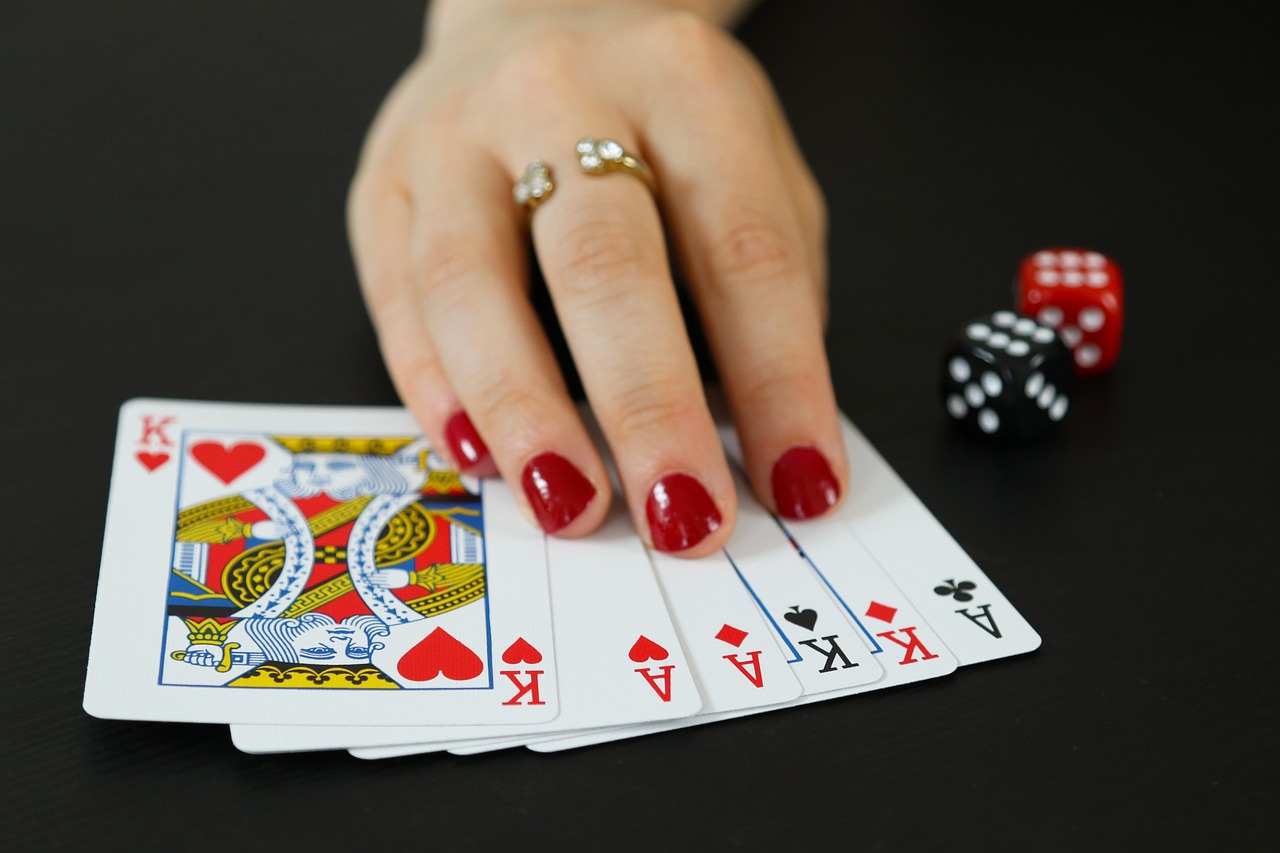
The Real Difference Between luck and edge in iGaming
Every casino floor tells the same story in a different accent. A slots player feeds a machine for twenty minutes, hits a bonus, and walks away convinced they've cracked a pattern. Two tables over, a poker player folds ace-king preflop because the math says so, and nobody claps. That gap — between feeling lucky and actually having an edge — is the single most important thing to understand in iGaming, and almost nobody explains it properly.
Here's the uncomfortable truth: in slots, blackjack, and roulette, you don't have an edge. The house does. Your job is to manage variance, not beat it. In poker and sports betting, an edge is real and measurable — but it's tiny, hard-won, and easy to lose. Let's break down what that actually means across the main verticals.
Slots: the math doesn't care how you feel
A modern video slot's return-to-player (RTP) usually sits between 94% and 97%. That means for every €100 wagered over the long run, you get back €94 to €97. Sounds close to even, right? Here's the catch — the operator doesn't need you to lose every session. They just need volume. A slot with 96% RTP and high volatility might pay you nothing for 200 spins, then hand you 300x on spin 201. The machine isn't due. It isn't hot. It has no memory.
That randomness is legally enforced, and it's why 'slot strategy' content online is mostly fiction. There's no way to time a jackpot. But there are concrete decisions that genuinely change your expected outcome:
- RTP matters more than theme. The same game on a different operator can vary by 2-4 percentage points. A 94% version and a 96% version of the identical slot cost you an extra €2 per €100 wagered.
- Volatility dictates session length. Low-volatility slots (think 20-30x max wins) stretch a bankroll. High-volatility slots (10,000x potential) will shred a small bankroll before you ever see the top end.
- Bonus terms are the real trap. A 100% match bonus with 40x wagering on slots means you must wager €4,000 to clear €100. At 96% RTP, that's a theoretical €160 cost. Read the terms before you claim anything.
If you play slots, play them as entertainment with a fixed budget. That's not a lecture — it's the only honest framing. This is explained well on สล็อตเว็บตรง.
Blackjack and roulette: strategy shrinks the edge, it doesn't erase it
Blackjack is the rare table game where player decisions matter. Basic strategy — the mathematically optimal play for every hand combination — cuts the house edge from roughly 2% down to about 0.5%, depending on the rule set. That's a huge swing. But it doesn't turn the game in your favor.
What actually flips the edge is rule quality. A 6:5 payout on blackjack (instead of 3:2) adds roughly 1.4% to the house edge on its own. That single rule can wipe out the benefit of perfect play. Look for:
- 3:2 payouts on naturals — non-negotiable.
- Dealer stands on soft 17.
- Double after split allowed.
- Late surrender available.
- Six or eight decks, ideally with good penetration if you're counting.
Roulette is simpler: European single-zero wheels carry a 2.7% house edge. American double-zero wheels carry 5.26%. Same game, nearly double the cost. If you're playing American roulette for anything other than a quick thrill, you're paying a tax for no reason.
Poker: the only game where you're the house
Cash-game poker is fundamentally different. You're not playing against the casino — you're playing against other people, and the casino just takes a rake (typically 5% capped at €3 to €5 per pot). Your edge comes from exploiting opponents, not from beating a fixed mathematical model.
That edge is real but smaller than most players believe. A strong micro-stakes grinder might win 5-10 big blinds per 100 hands. A great one, 15. Meanwhile, variance at 6-max no-limit hold'em is brutal. Even a 10bb/100 winner can lose for 50,000 hands. That's not a downswing — that's normal noise.
What separates winning players isn't a secret hand chart. It's:
- Position awareness. Playing tight from early seats and wide from the button is the foundation of every modern strategy.
- Bankroll management. Serious cash players keep 20-30 buy-ins for the stakes they play. Tournaments demand 50-100 buy-ins because variance is higher.
- Game selection. The best players don't just play well — they sit in soft games. A mediocre player at a great table beats a great player at a bad one.
Sports betting: the line is the opponent
Sports betting gets lumped in with casino games, but the mechanics are closer to poker. You're betting against a market, and the bookmaker's margin (the vig or juice) is baked into the odds. A standard -110/-110 line implies a 4.76% hold. To profit long-term, you need to win more than 52.4% of your bets at that price.
That's a high bar. Most recreational bettors hover around 50%, which means the vig slowly eats them alive. Sharp bettors focus on:
- Line shopping. Getting -105 instead of -110 on the same game is a 0.5% edge swing — enormous over thousands of bets.
- Closing line value (CLV). If you consistently beat the closing line, you're likely a long-term winner regardless of short-term results.
- Specialization. The best bettors know one or two leagues deeply — not all of them.
- Bonus and promo value. Sign-up offers, free bets, and odds boosts are where the real, guaranteed edge lives for most people.
What actually separates winners from the crowd
Here's the pattern that shows up everywhere in iGaming. The people who do well — or at least lose slowly and enjoy themselves — share one trait: they understand where the edge sits and who holds it.
- In slots, they know they have no edge and budget accordingly.
- In blackjack and roulette, they optimize rules to shrink the house edge.
- In poker, they treat the game as a skill contest with variance attached.
- In sports, they respect the vig and hunt for value, not locks.
The flip side is the player who thinks a hot machine, a 'system,' or a gut feeling is an edge. That player isn't unlucky. They're just paying for the illusion that skill exists where it doesn't — and ignoring it where it does.
If you take one thing from this piece, make it this: iGaming rewards people who know which game they're actually playing. Slots are a lottery with better graphics. Blackjack is a grind. Poker and sports are markets. Treat each one with the respect its math demands, and you'll make smarter decisions — even if the results still swing wildly in the short run. That's not a lack of edge. That's just variance doing what it always does.


History
-
The Norman invasion reshaped Irish politics and land ownership, leaving a lasting mark on towns, families, and the English language in Ireland.


Travel




-

Long established fact that a reader will be distracted
-

Long established fact that a reader will be distracted
-

Long established fact that a reader will be distracted




Genealogy
Karla Gleichauf
12 May 2017 at 05:28 pm
On the other hand, we denounce with righteous indignation and dislike men who are so beguiled and demoralized by the charms of pleasure of the moment
M Shyamalan
12 May 2017 at 05:28 pm
On the other hand, we denounce with righteous indignation and dislike men who are so beguiled and demoralized by the charms of pleasure of the moment
Liz Montano
12 May 2017 at 05:28 pm
On the other hand, we denounce with righteous indignation and dislike men who are so beguiled and demoralized by the charms of pleasure of the moment